 English


Antalya
Home Physical Therapy (Physiotherapy) Service Prices
 CONTENTS
What is Home Physical Therapy? Antalya
Home physical therapy consists of specialized treatments given at home to recover from functional losses caused by injury, illness, trauma, or advanced age.
Physical therapy is among the most important medical branches and is also known as physiotherapy. Working in a multidisciplinary approach, physiotherapy teams touch people's lives in many areas—from surgery to intensive care units.
People often wonder if they can recover without surgery, or how to adapt after surgery—these answers are found in physical therapy. Increasing interest in physical therapy now also includes home treatment under home healthcare services.
Home physical therapy has become a preferred option for many, since exercise programs require regular follow-up and are adjusted based on the patient's progress.
Receiving physiotherapy at home, which is a process requiring time and patience, provides psychological comfort and a more practical solution. Especially for neurological and pediatric cases, regular monitoring is critical.
If you want to regain lost function quickly through home physiotherapy, you can contact our expert physiotherapists in Antalya who serve 24/7.
What are the Advantages of Home Physiotherapy Service?
There are many advantages to receiving home physical therapy with a specialized team, such as:
- You can access treatment immediately without waiting in line for a hospital appointment.
- It completely eliminates difficulties for people with serious illnesses or mobility issues.
- During times like a global pandemic, it protects both from infection and hospital-acquired infections.
- Therapeutic exercises often done in crowded clinics are performed one-on-one in the comfort of your home, making treatment more effective.
- It removes issues faced by those who are uncomfortable in crowded places or have sensitivities about movement or clothing.
- The physiotherapist can easily organize your home and life for safety and comfort, minimizing risks like falling.
- Time and money spent on transportation is saved, and energy is better preserved for the therapy itself.
Who is Home Physical Therapy Suitable For?
Home physiotherapy is often chosen by those who have difficulty with mobility. Patients after intensive care, in palliative care, after knee or hip replacement, or with neurological diseases like MS, dementia, stroke, Alzheimer’s, Parkinson’s, or children/adults with cerebral palsy (CP) can all benefit, as well as anyone unable to travel or recommended for home therapy by their doctor.
Along with home physical therapy, patients in need may also receive additional in-home medical services according to need.
What Age Range is Appropriate for Home Physical Therapy?
Home physical therapy is suitable for all ages and is planned and supervised by a professional team. If the environment or condition is not appropriate for treatment, proper guidance will be given. Therefore, it is important to trust a competent team with your care.
What Should I Do to Receive Home Physical Therapy?
First, the physiotherapist evaluates the patient and devises a diagnosis and treatment plan. Exercise routines are arranged under doctor supervision, and home sessions begin according to the patient’s condition.
Duration and Weekly Session Count for Home Physical Therapy?
Home physical therapy sessions in Antalya generally last about one hour. The exact duration depends on the patient’s age, health, and capability. Weekly sessions are usually held 3–4 times but can be adjusted based on individual needs.
Who Can Receive Home Physical Therapy?
- Patients who have suffered a stroke,
- Patients with neurological diseases (Cerebral Palsy, MS, Parkinson’s, ALS, etc.),
- Those with spinal cord injuries,
- Pediatric patients (spina bifida, cerebral palsy, torticollis, etc.),
- For geriatric rehabilitation (detailed exercise and daily living programs for elderly individuals),
- Palliative care patients,
- Patients requiring orthopedic rehabilitation (meniscus injury, ACL, prosthesis, hip fracture, hip/knee replacements, etc.),
- Those with respiratory difficulties,
- Patients with lumbar or cervical hernia,
- Patients with joint pain or osteoarthritis—can all benefit from home therapy programs.
Pediatric and neurological rehabilitation is especially recommended as these are long and demanding processes.
For example, an elderly patient who has had a stroke may find it very tiring to travel to the hospital every day, decreasing their participation and negatively impacting their life. Hospitalization for physical therapy may also make adaptation to normal life harder for both the patient and their family.
With home physiotherapy, sessions can be adapted to the patient's sleep and nutrition schedule, and working one-on-one at home, away from external distractions, often brings much better results.
The same applies for children with cerebral palsy—transportation can be challenging, and home environments can help reduce spasticity triggered by noise or stress, enabling more effective therapy.
Palliative care patients can exercise and be positioned properly by the physiotherapist while staying close to family at home.
In orthopedic cases (like post-hip or knee replacement), patients are often discharged quickly after surgery. Early physiotherapy at home is very important for these patients, and being able to have therapy at home, especially during such times, brings extra benefits.
Techniques and Devices Used in Home Physical Therapy
Home physical therapy is organized by the physiotherapist under doctor's guidance. In addition to exercises, treatment techniques and devices may include:
- Heat application (hot packs),
- Cold application (cold packs),
- TENS and other electrical stimulation devices (muscle strengthening devices),
- Pain tapes,
- Wrist weights,
- Manual therapy and techniques,
- TENS and other electrotherapy devices,
- Manual therapy methods,
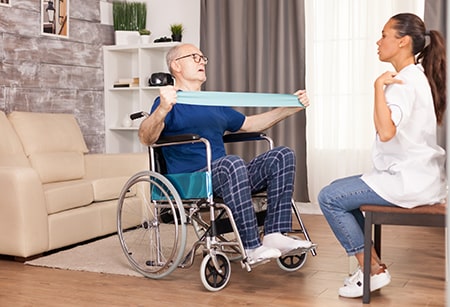
- Exercise tools (resistance bands, therabands, etc.),
- Large equipment previously used in hospitals now have more portable home versions.
The smaller size of the devices does not reduce their effectiveness; every current has a specific frequency, and these devices deliver that. Additional equipment such as lead weights, theraband, graston sets, cupping sets, exercise pillows, and kinesio tape can also be brought to your home by the physiotherapist.
With our home physical therapy service, those who have lost mobility or need physical support after surgery experience shorter recovery times and enhanced healing.
Home Physical Therapy Pricing – Antalya
Home physical therapy (physiotherapy) prices may vary depending on personalized treatment packages or session requirements and the location of service. Contrary to popular opinion, prices are generally not expensive—in fact, they can be more cost-effective when you consider time spent traveling and transportation costs.
For information about home physical therapy (physiotherapy) prices in Antalya and further details, please contact us.